Fountains
A pond fountain adds visual height, creates ambience and can add artistic elements to an otherwise static water feature….the pond fountain may be a simple water jet sent up from the pond surface, or a more complex arrangement that is only limited by our imagination. Water can be projected in all directions and from almost any structure, while the water flowing over their surfaces, enhances their natural beauty, colour, form and shape.
A pond fountain is often the focal point or may be sculptural artwork, but it can also be the backdrop to set the scene. While others can be entertaining to watch.
The keys to successful pond fountain design....
Pump sizing and water flow are critical in the design of a great water feature.
The volume of water, the type of spray or water jet and the pressure at which they are pumped through or over the feature are all factors that need to be considered in creating a successful pond fountain design.
Finer spray jets can lighten the look and sound from the feature. Sometimes a simple bubbler or just a steady low pressure flow of water over the water feature enhances the richness of their colours.
The sound of water is critical to a successful pond fountain design...
With any pond fountain, the sound of water can have a very powerful influence on how we feel.
Understanding the purpose of the sound is an important component of the design. A soft babbling of the water could evoke feelings of peace and serenity, while a larger flow of water from a greater height may be used to drown out the traffic noise around us or can be used to draw attention.
Be aware that in a smaller confined space, such as a courtyard, the sound of the water is significantly amplified and may become an overwhelming disturbance. If you wish to hear the water from indoors then a larger pond fountain is ideal. However, if you seek a quite place to sit outside,relax and read, then a much softer sound is preferred.
The splashing water does more than delight ones’ eyes, it also introduces the calming melodious sounds of nature, while improving the pond health through oxygenation.
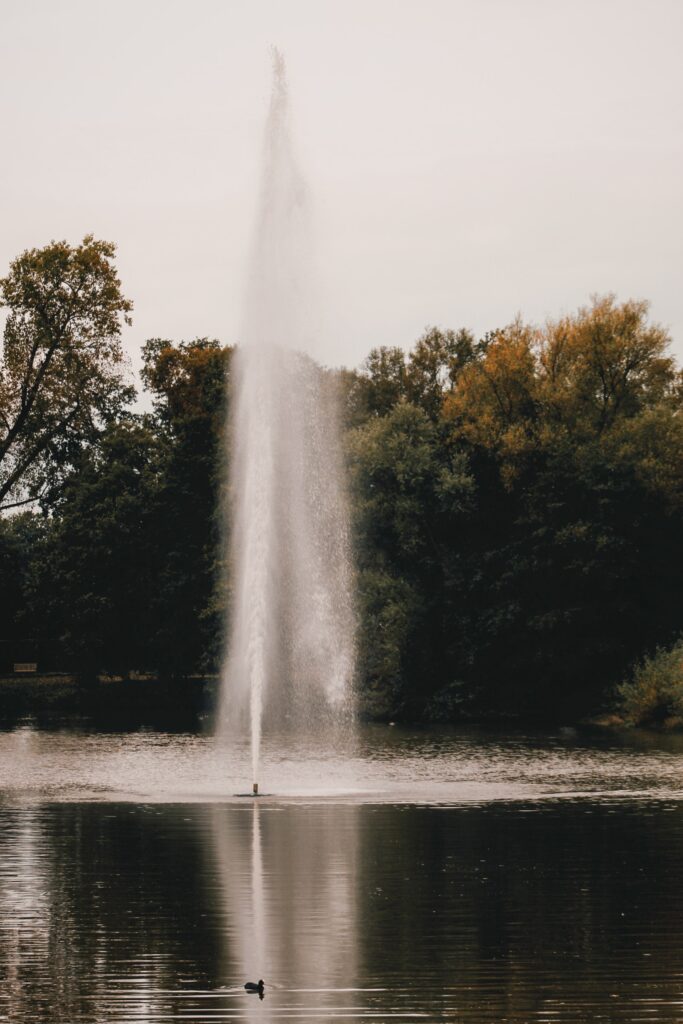
Other factors to consider when choosing a pond fountain...
- Ensuring that the base of the pond is large enough to capture the water that falls from the pond fountain.
- Wind can easily blow smaller water droplets away from the pond, resulting in increased water loss or even creating water hazards with wet pathways.
- Reducing the pump flow, decreasing the height or distance of the water jet or reducing the water pressure can all help to minimise the risk.
- While increasing the size of the nozzle outlet from the water jet can also result in larger droplet sizes that are less likely to be buffeted by the wind.
- Many aquatic plants such as Water lilies would not be suitable if they are placed too close to the splashing water. Their floating leaves would be continuously covered in water and they would suffer, through their inability to breathe and they may also be damaged by the force of the water.
Plants with upright stems can tolerate some splashing, as the droplets trickle back down into the pond.
Submerged water plants are plants that grow with their leaves below the water. This very feature makes them ideal for use near the base of the pond fountain (not directly under a heavy waterfall) because they do not distract from the design of the water feature.